





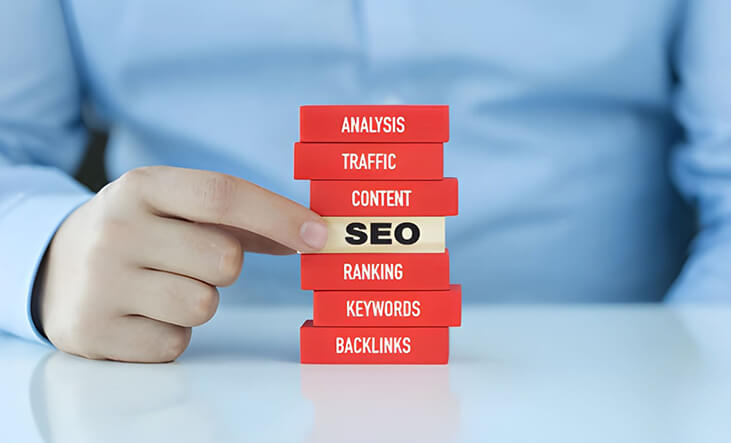

Key Takeaways
- Google AI Overviews now appear in roughly 20% of all searches and in nearly all informational queries, making GEO a non-negotiable part of any modern SEO strategy.
- Generative Engine Optimization (GEO) is the practice of structuring content so that AI-powered search engines cite your brand in their generated answers, not just in a list of links.
- Traditional SEO fundamentals, including E-E-A-T, technical health, and backlinks, remain the foundation of GEO success.
- Content that leads with a direct answer, uses question-based headers, cites specific data, and includes proper schema markup consistently earns more AI citations.
- GEO is not a replacement for SEO. It is an additional layer built on top of it.
- Brands that start now have a compounding advantage as AI search adoption continues to accelerate.
The Search Landscape Has Changed. Have You?
A few years ago, the goal was simple: rank in the top three positions on Google and watch the traffic roll in. Today, that is still important, but it is no longer the whole picture. A growing share of search results pages now open with an AI-generated summary that answers the user’s question before they ever scroll down to the blue links. That summary, which Google calls an AI Overview, is powered by Gemini and draws from multiple sources across the web. If your content is not among those sources, you are invisible to a significant portion of your audience.
I work with clients on this exact challenge at Eyeshot Agency, and the question I hear most often is: “How do I get my brand into those AI answers?” This guide walks through everything you need to know about Generative Engine Optimization (GEO) and how to position your content to be cited by Google AI Overviews, Perplexity, ChatGPT, and other AI-powered answer engines.
What Are Google AI Overviews, and Why Do They Matter?
Google AI Overviews are AI-generated summaries that appear at the very top of search results for queries where Google determines a synthesized answer adds value. They are powered by Google’s Gemini models and use a technique called “query fan-out,” where the AI issues multiple related sub-searches across sources before composing a response. According to Google’s own Search Central documentation, AI Overviews are only shown when Google’s systems determine they are additive to the classic search experience.
Research from Ahrefs found that AI Overviews appear in approximately 99% of informational queries, the kinds of searches that begin with “how,” “what,” “why,” and “best way to.” That is a massive slice of search volume, and being cited in those overviews builds brand authority whether or not the user clicks through to your site.
The shift is real. One study found that AI Overviews lower click-through rates by an average of 34.5% for the traditional organic results beneath them. But here is the other side of that coin: brands like NerdWallet and HubSpot have reported significant revenue growth despite traffic declines, because the users who do click are arriving with stronger intent and more context. Traffic quality is rising even as raw volume shifts.
What Is Generative Engine Optimization (GEO)?
Generative Engine Optimization, or GEO, is the practice of structuring your content so that AI-powered search platforms select it as a source when generating answers. Where traditional SEO focuses on ranking in a list of links, GEO focuses on earning a citation inside the AI-generated response itself.
The term was formally coined in academic research published by Princeton, Georgia Tech, and IIT Delhi in 2024, and it entered mainstream marketing vocabulary shortly after. The core insight from that research is that AI engines strongly favor authoritative third-party sources over brand-owned content. The implication for your strategy is significant: your own website alone is not enough. You need mentions, citations, and coverage across the broader web.
That said, GEO is not a replacement for SEO. It is an additional layer built on top of it. Brands that already have strong traditional SEO foundations, including high domain authority, quality backlinks, and well-structured content, are consistently the same brands earning the most AI citations. You cannot skip SEO and jump straight to GEO.
The Core Factors That Drive AI Overview Citations
1. Answer-First Content Structure
AI systems heavily favor content that follows what researchers call an “answer-first” format. The first 200 words of any page should directly and completely answer the primary query, not build up to the answer over several paragraphs. A clear, 40-to-60-word direct answer placed immediately after the opening heading gives AI models something they can cleanly extract and cite.
This is a meaningful shift from the traditional blog post format, where the introduction typically frames the problem before the solution appears later. For GEO, you want to state your answer up front and then use the body of the content to support, expand, and contextualize it.
2. Question-Based Headers
AI models select content partly based on how well a page’s headers match the actual query being asked. A header that reads “What Is Generative Engine Optimization?” is far more likely to be cited for that query than one that reads “Understanding GEO” or “GEO Overview.” Reformatting your H2 and H3 tags as questions that mirror real search language is one of the highest-return changes you can make to existing content.
Use Google Search Console query data to find the exact questions your audience is already asking, and then make those questions your headers. The alignment between query language and header language is a strong citation signal.
3. Specific, Citable Data
Vague marketing language gets ignored by AI systems. Statements like “we deliver great results” carry no citation value. Specific, verifiable claims do. A sentence like “content with proper schema markup shows 30-40% higher visibility in AI-generated answers” is far more likely to be extracted and cited than a general claim about schema being useful.
When you reference statistics or research, link to the original source. This supports E-E-A-T (Experience, Expertise, Authoritativeness, and Trustworthiness), which Google explicitly ties to its quality evaluation systems, and it increases your content’s credibility in the eyes of both AI systems and human readers.
4. Schema Markup
Structured data helps AI crawlers understand what your content means, not just what it says. Implementing FAQ schema, HowTo schema, and Article schema consistently across your content is one of the most concrete technical steps you can take toward GEO. Research indicates that content with proper schema implementation shows measurably higher visibility in AI-generated answers.
Google’s Rich Results Test is a free tool that validates your schema implementation before you publish. It is worth running on any page you want to appear in AI Overviews.
5. E-E-A-T and Topical Authority
AI systems evaluate sources using signals that closely mirror Google’s E-E-A-T framework. They look for demonstrated expertise, real-world experience, authoritativeness within a topic area, and trustworthiness. Building topical authority means creating comprehensive clusters of content around a subject rather than publishing isolated articles. When AI models see that a domain consistently covers a topic in depth, that domain earns more citations across related queries.
At Eyeshot Agency, this is why our SEO strategies always incorporate content clustering alongside technical optimization. The two work together. A single well-written page rarely outperforms a well-structured content ecosystem over the long term.
6. Content Freshness
AI platforms prefer content that is meaningfully fresh. Research suggests AI systems favor content that is roughly 25% fresher than what traditional search results typically surface. Practically, this means adding a “What Changed in [Current Year]” section to evergreen articles, updating statistics regularly, and including visible “Last Updated” signals on your pages.
Content that references current data and recent developments signals to AI systems that it is a reliable, up-to-date source worth citing.
GEO Beyond Google: Answer Engines and LLMs
While Google AI Overviews represent the largest single opportunity given that Google still drives hundreds of times more traffic than ChatGPT and Perplexity combined, the principles of GEO apply across all answer engines. ChatGPT reached 800 million weekly active users as of late 2025, doubling within eight months. Perplexity is growing rapidly. Microsoft Copilot draws from Bing’s index. Each of these platforms evaluates sources using similar signals: authority, factual clarity, semantic relevance, and structured content.
The practical approach is to optimize your content using strong GEO fundamentals once and benefit across multiple platforms. An article that is well-structured, data-rich, properly marked up, and backed by genuine topical authority will perform in Google AI Overviews, in Perplexity citations, and in ChatGPT’s browsing responses.
One tracking method worth building into your workflow: manually test 10-15 relevant queries in ChatGPT, Perplexity, and Gemini monthly, and document where and how your brand appears. This gives you a real baseline for measuring GEO performance that most analytics dashboards still do not capture automatically.
Common GEO Mistakes to Avoid
Treating GEO as a one-time project. AI search optimization requires the same ongoing discipline as traditional SEO. Plan for three-to-six month optimization cycles with continuous improvement, not a single content refresh.
Optimizing for single keywords in isolation. AI systems look for comprehensive topic coverage, not keyword density. Create content clusters that address related queries across a topic rather than optimizing individual pages for isolated terms.
Ignoring third-party coverage. Because AI platforms trust earned media more than brand-owned content, digital PR and off-site mentions matter enormously for GEO. Client testimonials, industry directory listings, and press coverage all contribute to the picture AI systems build of your brand.
Publishing without schema markup. This remains one of the most commonly missed optimizations. It costs nothing to implement and meaningfully raises your AI visibility.
Abandoning local SEO. Voice search and local queries are processed by the same AI systems as general informational queries. Optimizing your local SEO presence and Google Business Profile remains essential, especially for service-area businesses. A good example of this in practice is how a business offering AC repair Dubai residents rely on needs to appear not just in traditional local results, but inside AI-generated answers when someone searches AC repair near me on Google. Those queries are increasingly resolved by AI Overviews before the user ever sees a map pack or organic listing.
Measuring Your GEO Performance
Traditional SEO metrics like rankings and organic traffic remain important, but they do not capture the full picture of AI visibility. Beyond Google Search Console, which tracks AI Overview traffic within the standard Performance report, consider tracking:
- Brand mention count across ChatGPT, Perplexity, and Gemini for your most important queries
- AI referral traffic in Google Analytics 4, segmented by source
- Citation sentiment, meaning whether AI accurately and positively presents your brand when it does cite you
- Share of voice in AI responses compared to key competitors
Specialized GEO platforms exist for this purpose, though many of the foundational measurements can be done manually at the start. The brands winning at GEO today are those who built the measurement habit early.
Start With What You Already Have
The single most important thing I want you to take away from this guide is that GEO rewards the same fundamentals that good SEO has always rewarded. Strong, well-structured content. Genuine expertise. Credible backlinks. Technical hygiene. If you have been building those things consistently, you already have the foundation.
What GEO adds on top of that foundation is intentionality around structure, freshness, schema, and off-site presence. The brands that figure this out early will earn compounding advantages as AI search adoption accelerates.
If you want a second set of eyes on how your current content and SEO strategy holds up against GEO criteria, I offer a free SEO analysis that covers both traditional and AI visibility signals. And if you are ready to put a full strategy in place, reach out to Eyeshot Agency for a custom proposal.
Frequently Asked Questions
GEO is the practice of optimizing your content to be cited by AI-powered search engines like Google AI Overviews, ChatGPT, Perplexity, and Gemini when they generate answers to user queries. Unlike traditional SEO, which aims for ranked links, GEO focuses on earning placement inside the AI-generated response itself.
Traditional SEO focuses on ranking your page in a list of search results. GEO focuses on having your content cited as a source within AI-generated answers. The two are not competing approaches. GEO is built on top of traditional SEO, not instead of it. Strong conventional SEO signals, including domain authority, E-E-A-T, and technical health, directly support GEO performance.
Google’s own documentation states that no special schema is required to appear in AI Overviews. However, implementing FAQ, HowTo, and Article schema consistently has been shown to improve AI visibility meaningfully. It is a low-cost optimization with measurable upside.
Not always in terms of raw clicks, since users often get their answer directly in the SERP. However, being cited in AI Overviews builds brand recognition and authority, and the users who do click through typically arrive with higher intent. Several publicly traded companies have reported revenue growth alongside traffic declines, largely attributed to this quality shift.
Research indicates AI Overviews appear in roughly 20% of all Google searches overall, and in close to 99% of informational queries, particularly those involving “how,” “what,” and “why” questions.
Yes. While pages in the top 10 have a higher probability of being cited, AI Overviews can draw from pages beyond the traditional first page of results, particularly when those pages offer well-structured, authoritative, and factually precise answers to a specific query.
Similar to traditional SEO, GEO is a long-term investment. Most practitioners recommend planning for three-to-six month optimization cycles before drawing conclusions. Content freshness, topical authority, and off-site mentions all build over time, and the compounding effect becomes more pronounced the longer you maintain the practice.